Letter of Credit · Document Request
Document Request
Designing the document-request step for Letters of Credit
Context
Letters of Credit are used in international trade to reduce risk between buyers and sellers by ensuring payments are only made once specific conditions are met. They are essential, but also complex, involving detailed information, strict requirements and multiple stages.
In a Letter of Credit, a document request defines the documents the seller must provide in order to receive payment. These typically include items like invoices, shipping documents or certificates. They act as proof that the agreed terms have been met. The bank reviews these documents before releasing funds, so this step is critical. It requires a high level of accuracy, as missing or incorrect documents can delay or block the transaction.
Problem
The document request section was one of the most complex parts of the flow. Users were required to define the exact documents the seller must provide in order to receive payment, often using technical terms and detailed conditions. Usually when this is presented in a physical form, the information is presented as a dense set of fields with little structure, making it hard to understand what is being asked and how to complete it correctly. Because this directly impacts whether payment is released, any confusion in this step carried a high risk of errors and delays.
Challenges
The document request step had to be handled carefully. While it might seem like something that could be simplified, the information needed to stay clear and accurate, which meant I couldn’t move too far away from the original wording. In some cases, the exact terminology had to be kept.
The structure of the information also followed a logical sequence that couldn’t be changed, so I had limited flexibility in how I could reorganise it. On top of that, the design system restricted how certain elements could be presented, which further shaped the solution.
There were also limits on moving information between steps. Even though some sections felt dense, the content had to stay within this step to make sense in the overall process.
My role
I worked on the user experience for the Letters of Credit journey, with a focus on structuring the flow and improving complex sections such as document request. I worked closely with the business PM and engineering team, who provided input throughout on business, legal and technical constraints.
Approach
The main challenge was not simplifying the Document Request step itself but making the experience easier to move through. Because a large amount of required information couldn’t be reduced, I focused on how it was structured and presented.
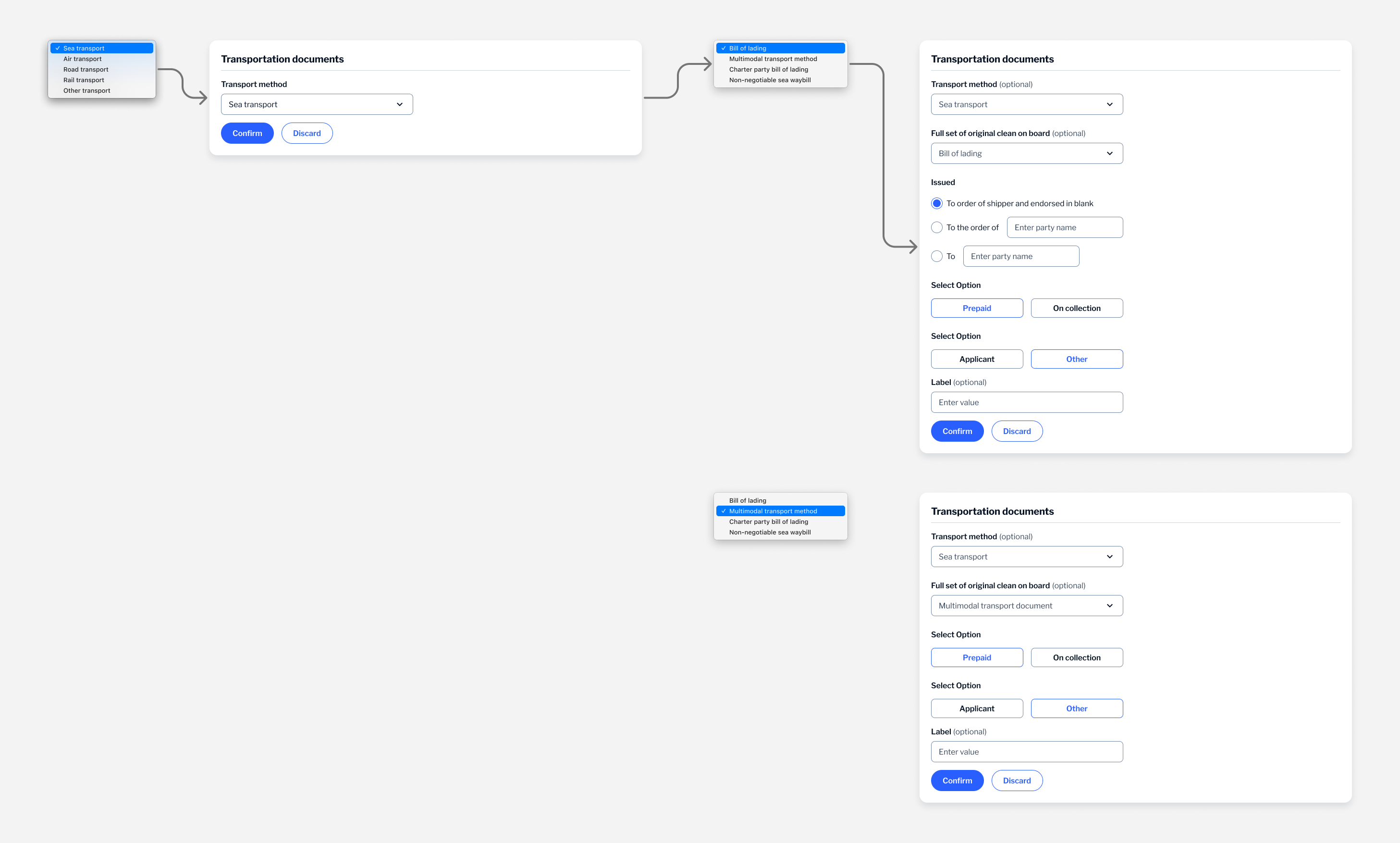
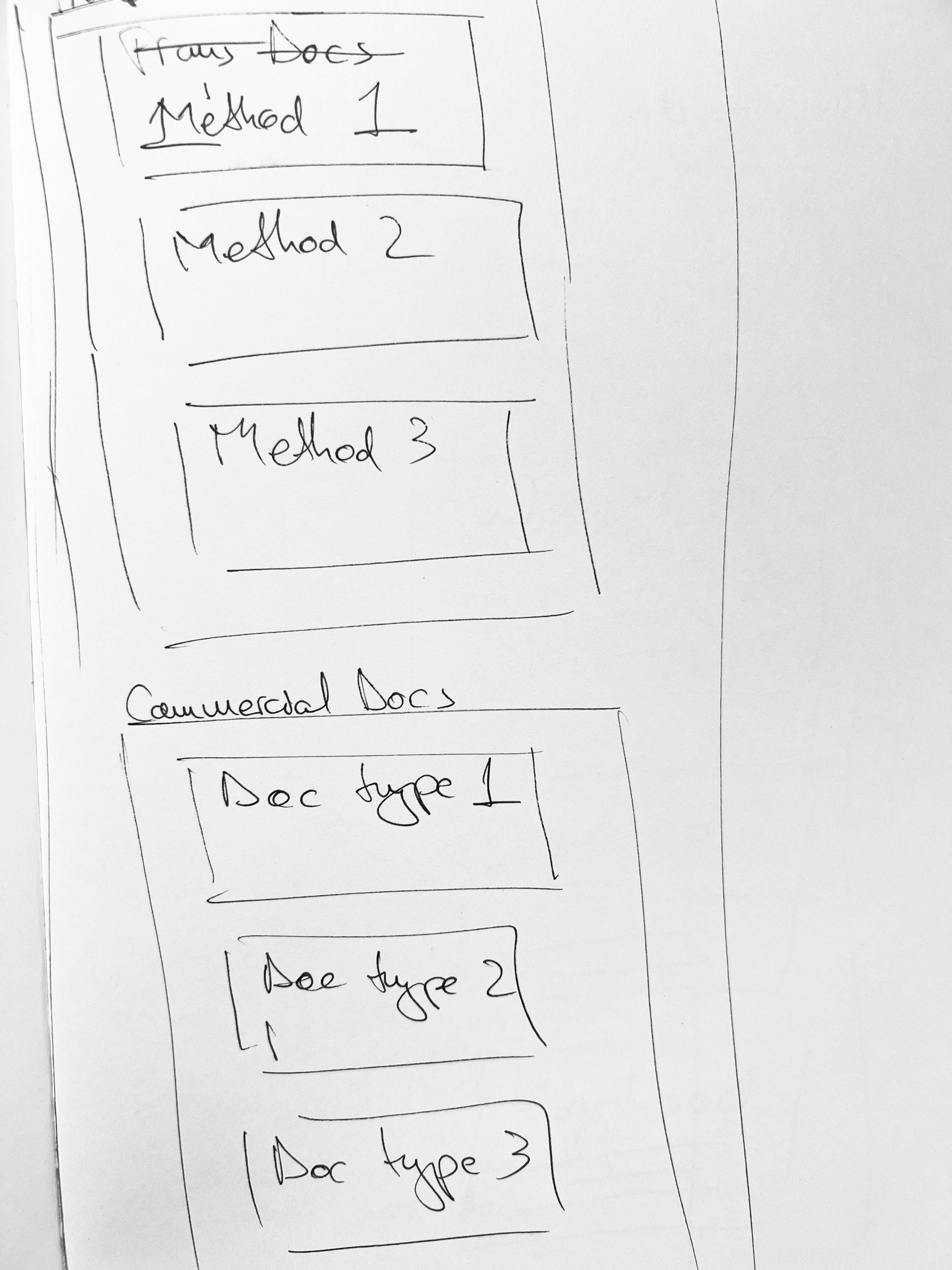
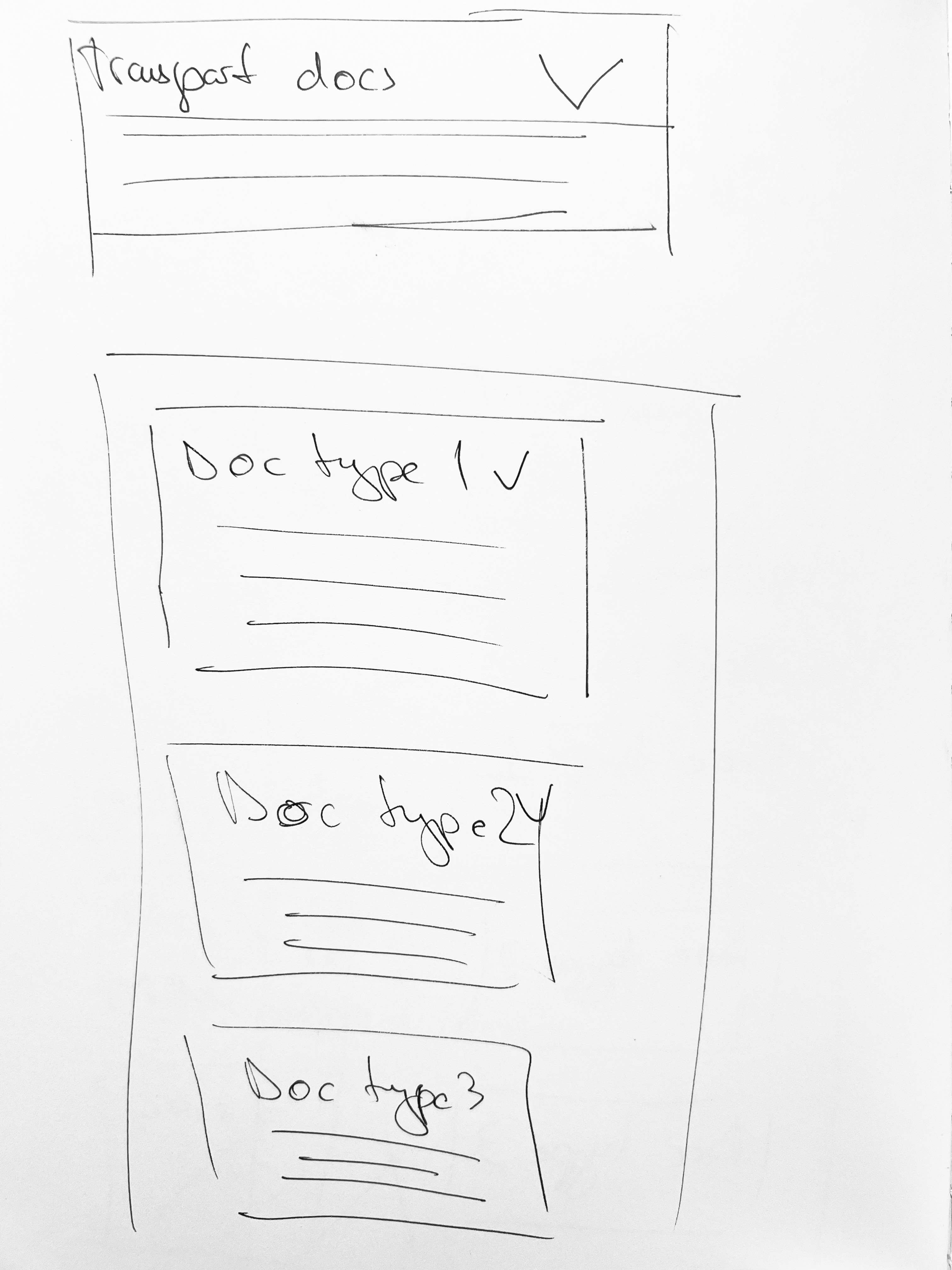
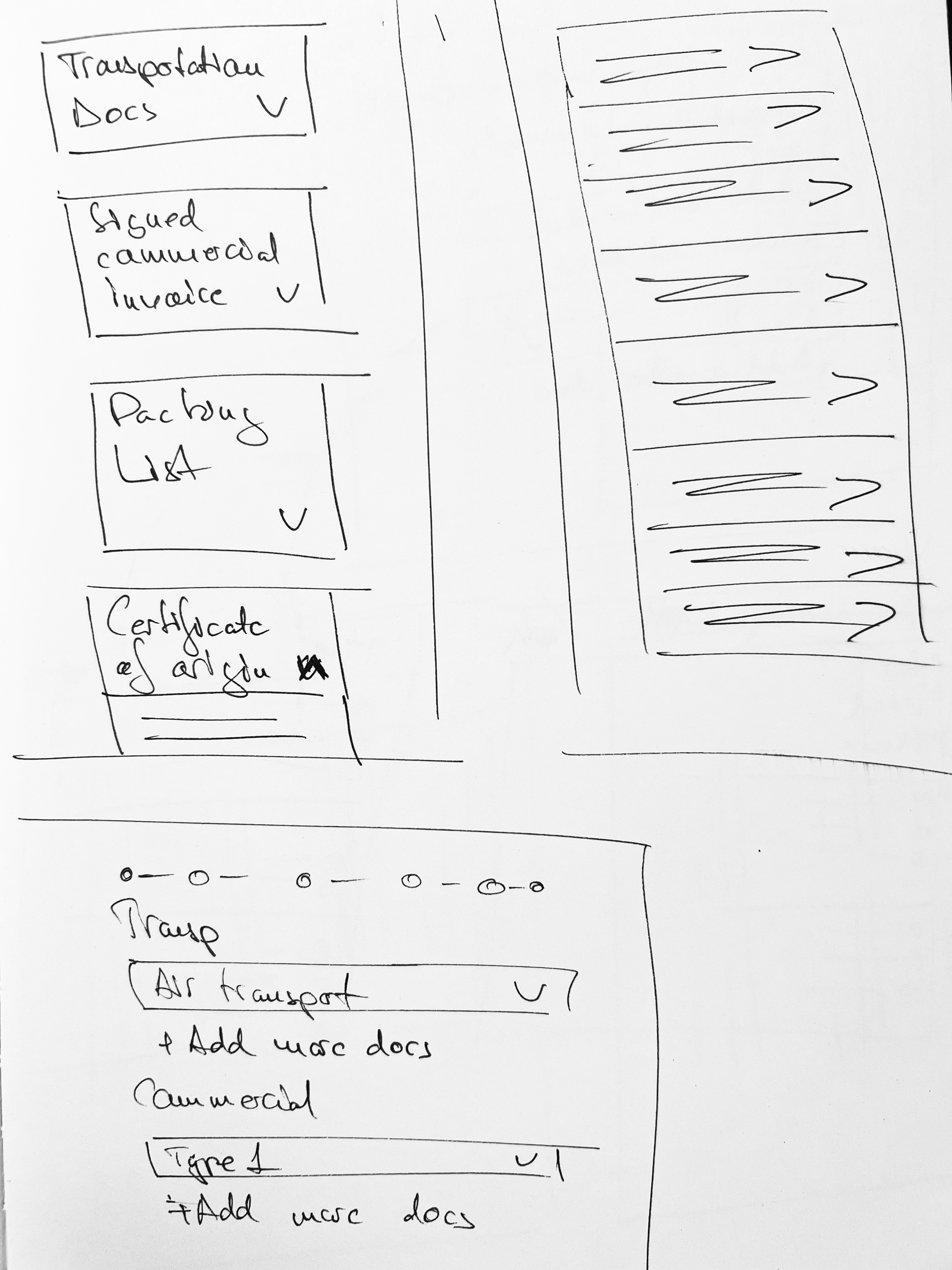
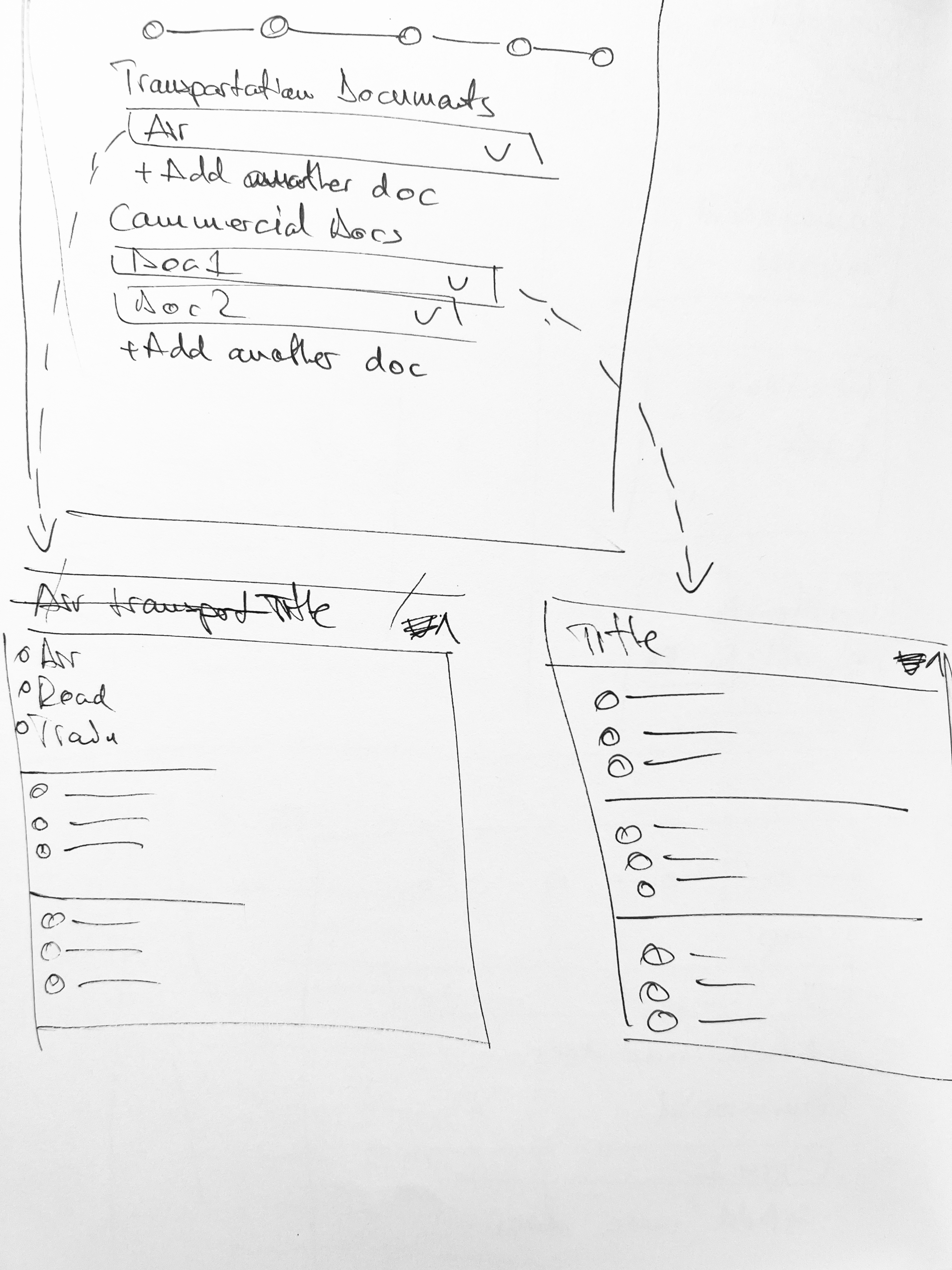
I broke the step into clearer groups based on document type and related requirements so users could focus on one set of inputs at a time instead of dealing with a long list of fields. I also improved the hierarchy to make the content easier to scan. This helped reduce the feeling of density, especially in areas where users had to define multiple document conditions.
Throughout the step, the goal was to make it clear what was being requested and reduce the risk of errors, given that this directly impacts whether payment is released.
Solution
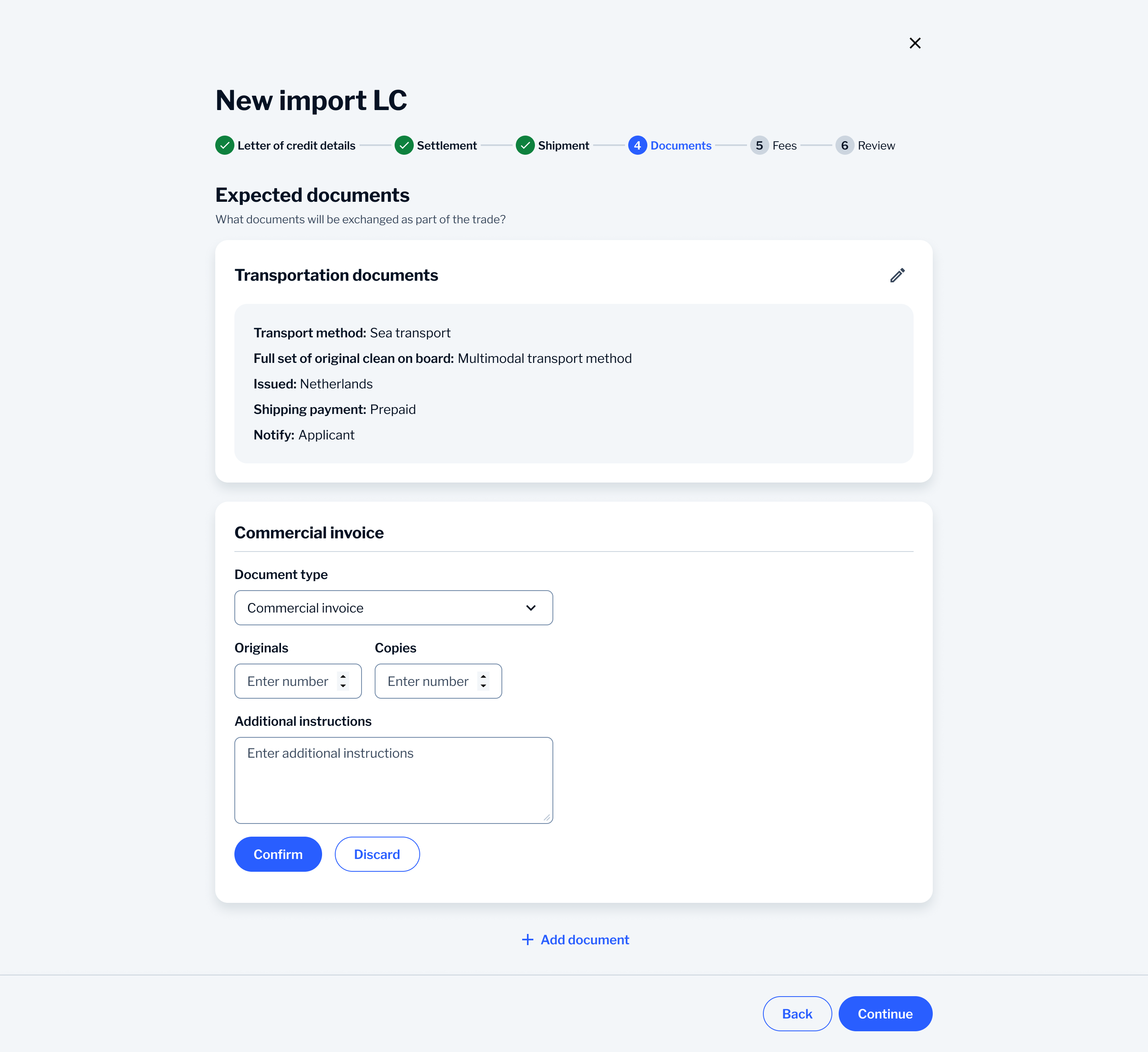
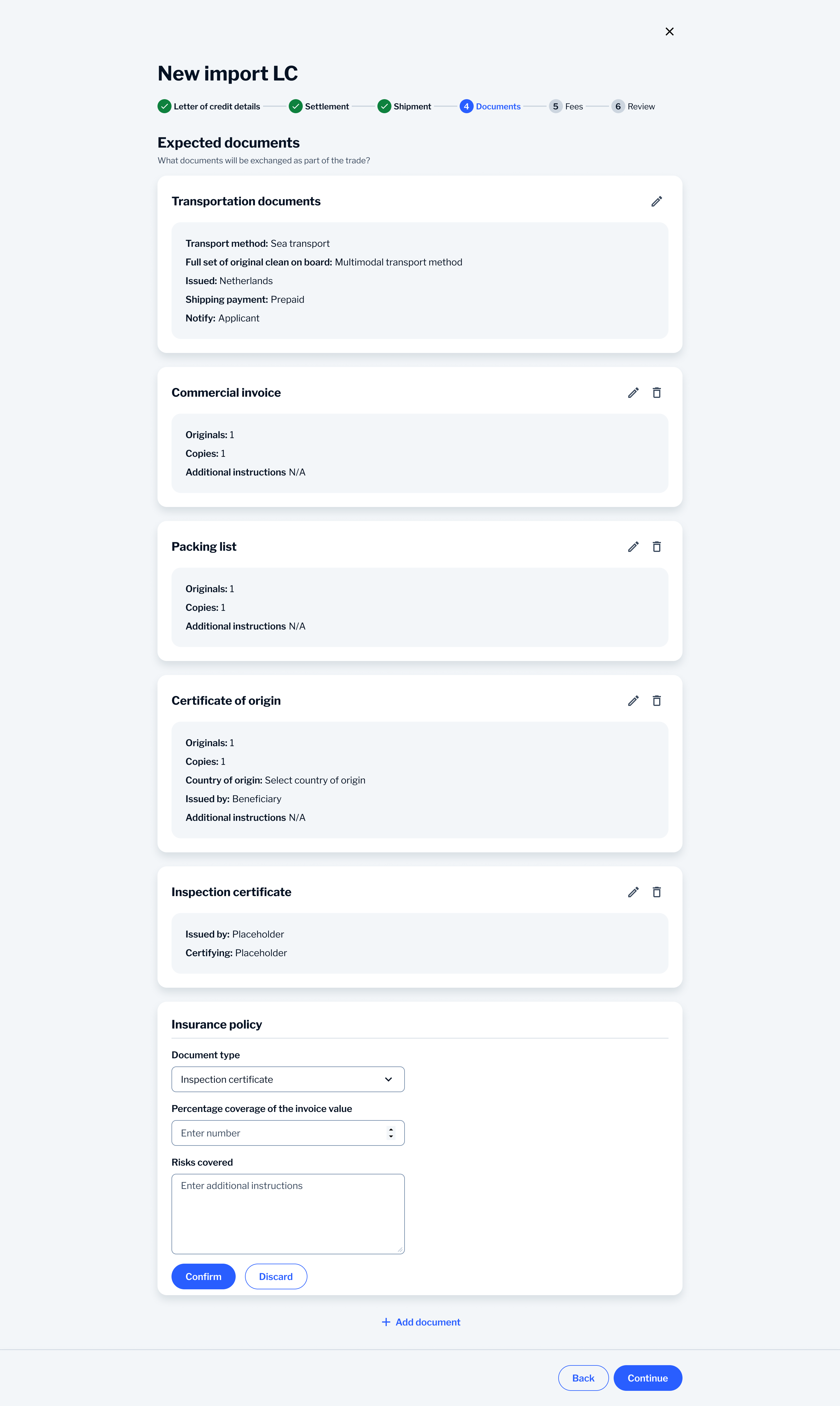
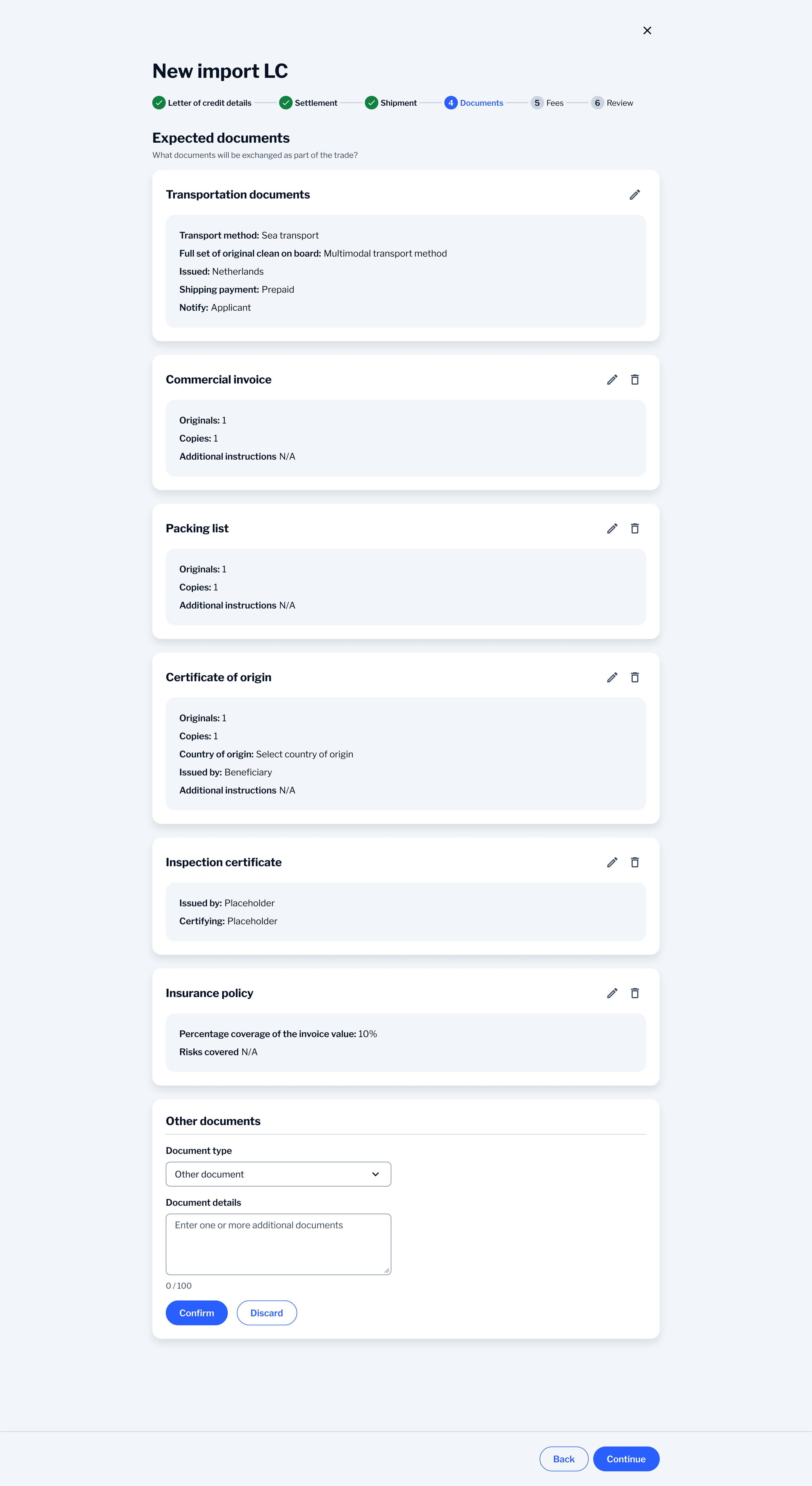
The document request step was redesigned as a structured, repeatable flow where users define one document at a time, instead of dealing with a single dense form.
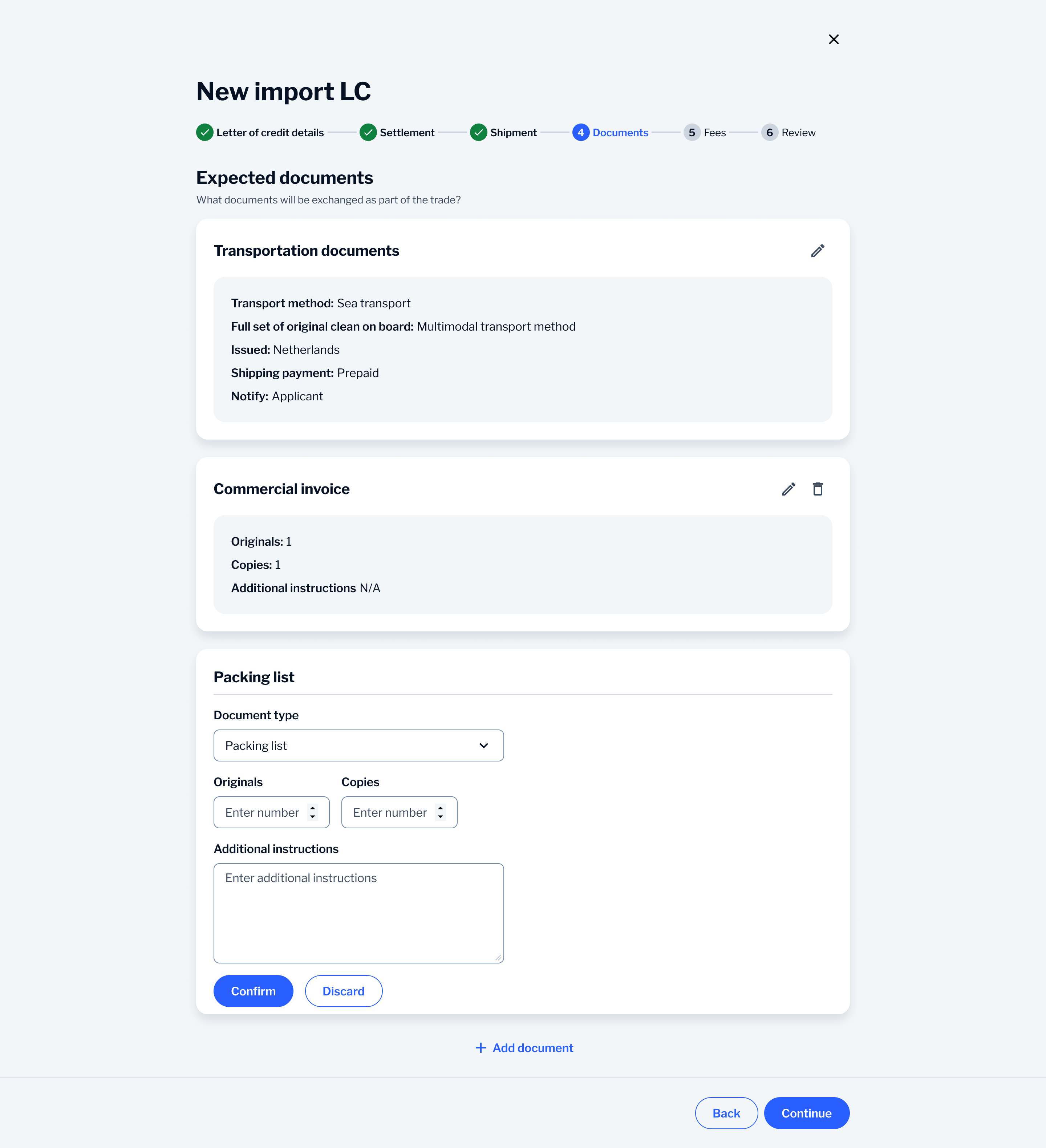
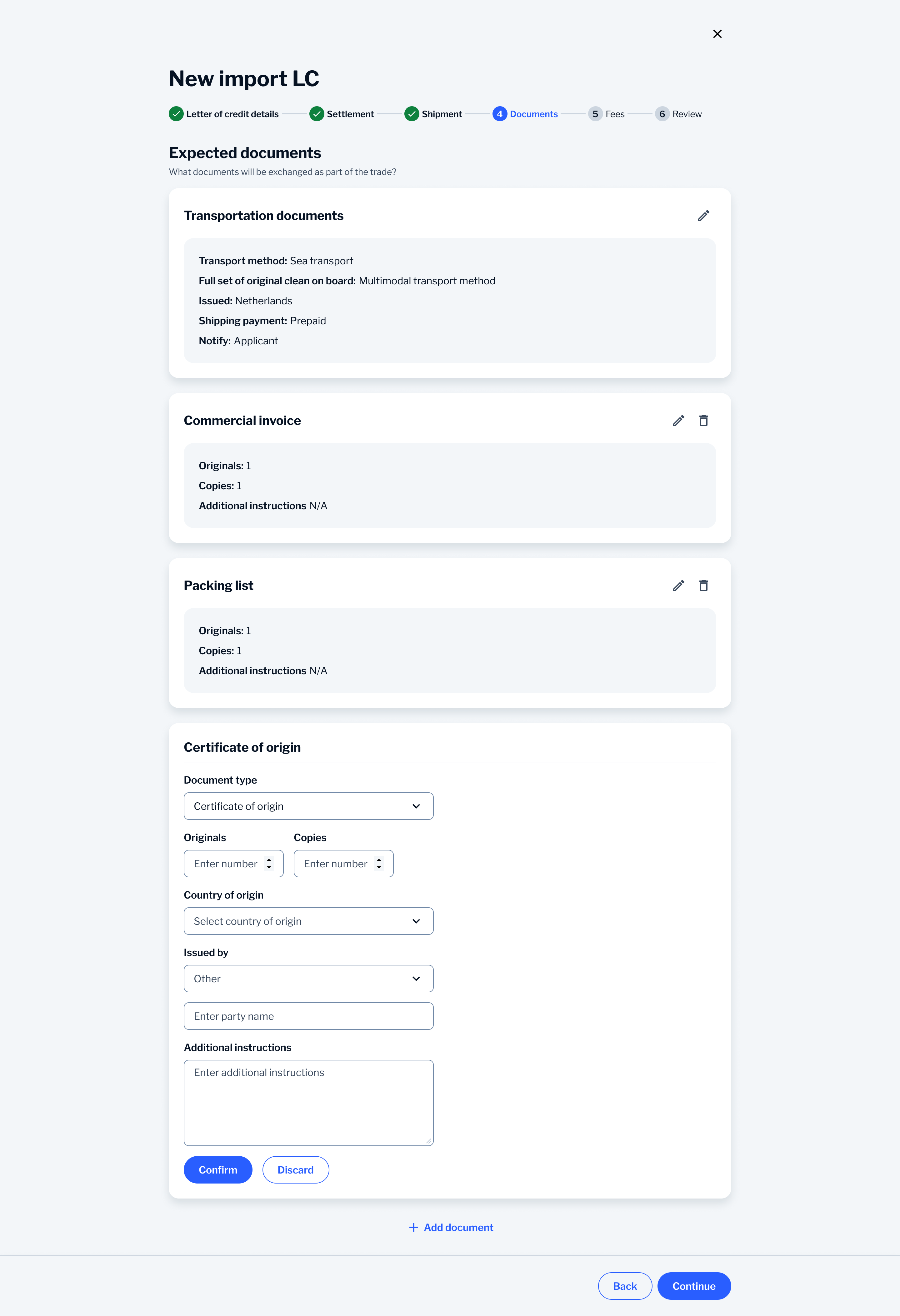
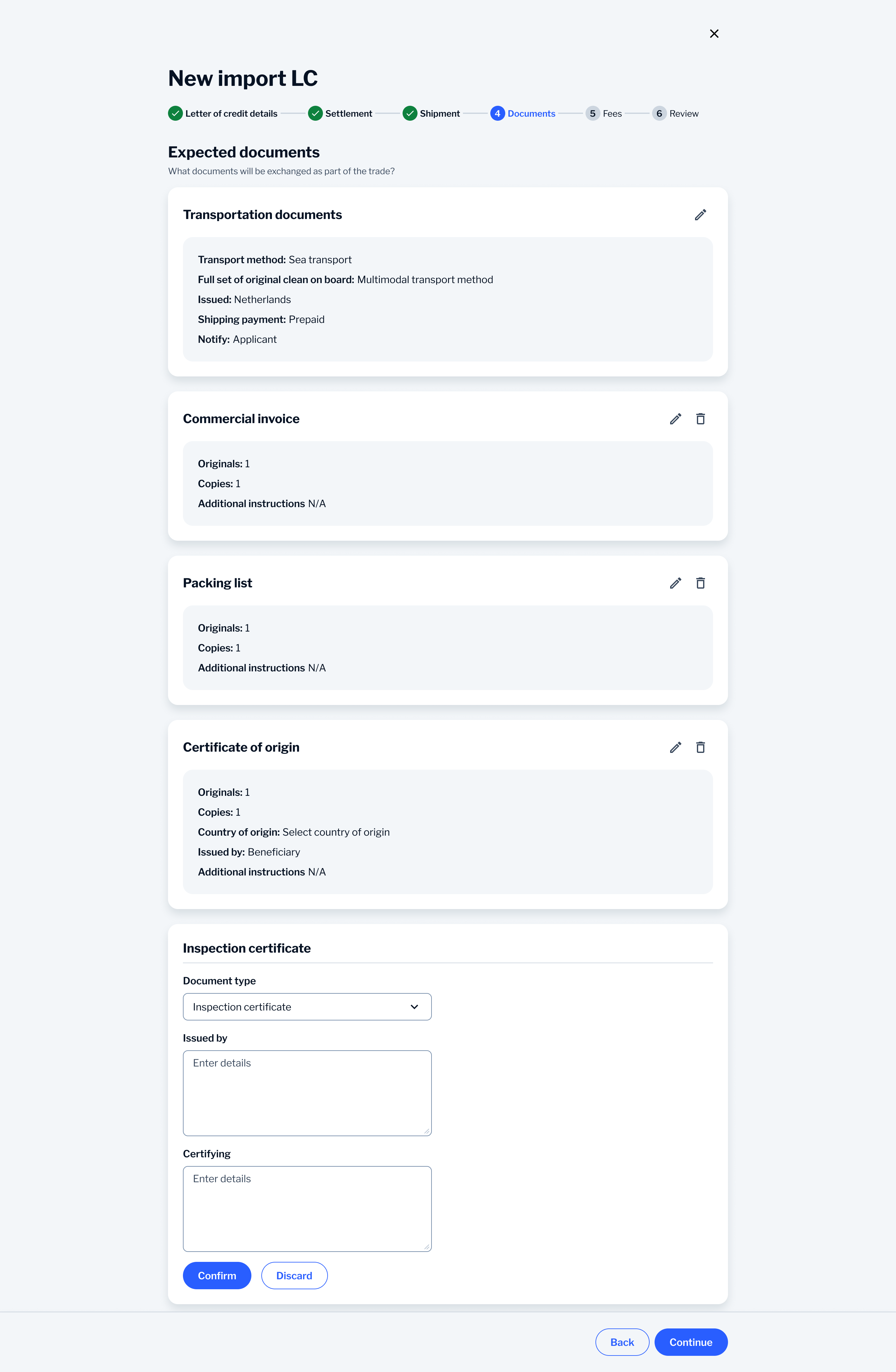
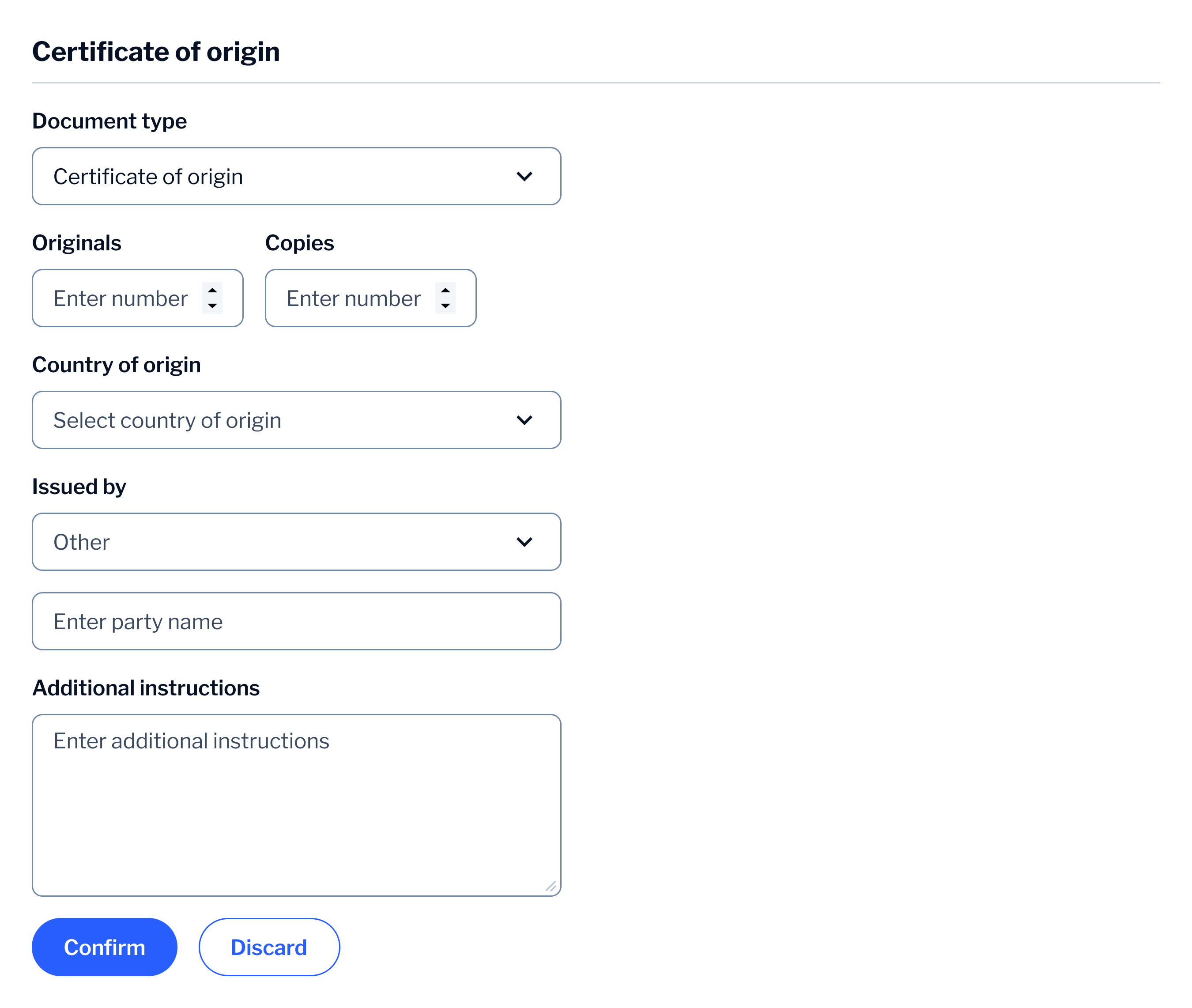
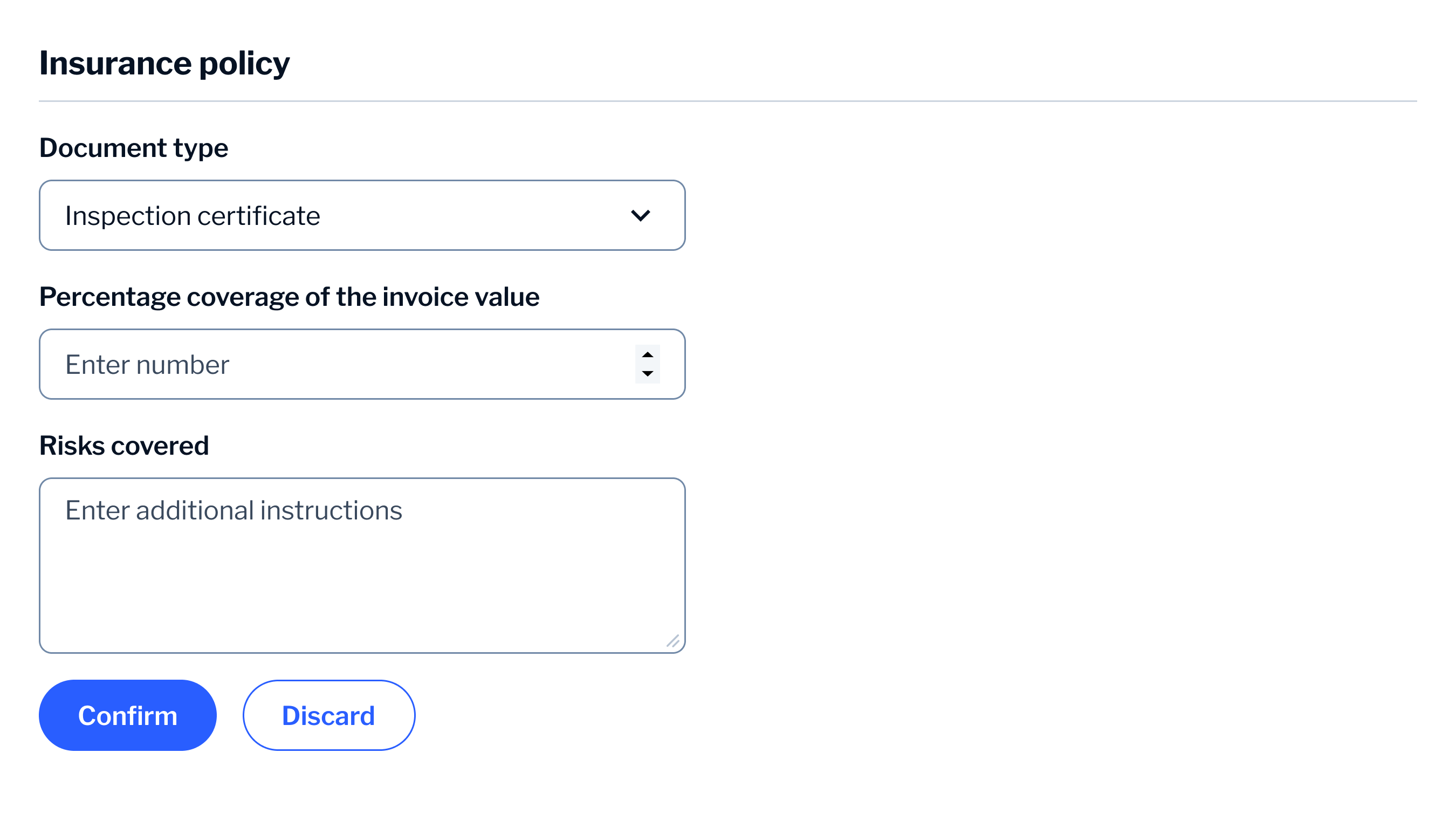
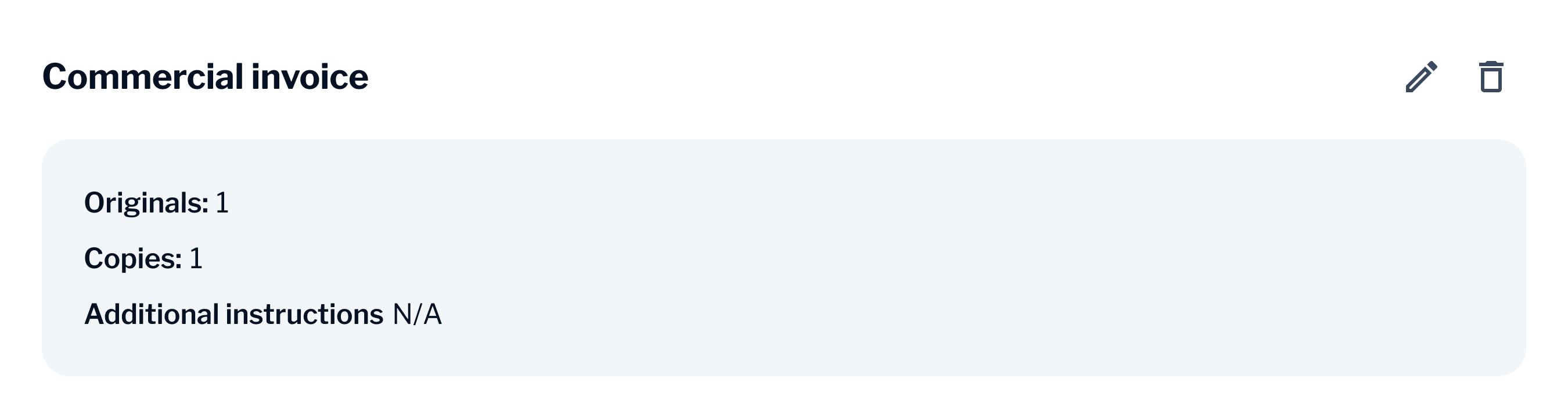
At the UI level, each document is handled as a separate unit. Users select a document type, fill in its specific requirements (such as number of originals, copies, or additional instructions) and confirm it before moving on. Once added, the document collapses into a summary card that shows only the key information, making it easy to scan and review.
This creates a clear interaction pattern:
Add a document
Define its requirements
Confirm and review it as a summary
Edit or remove it if needed
From a UX perspective, this shifts the experience from filling in a long, complex form to building a structured set of requirements step by step.
Focused input reduces overload
Each document is completed in isolation, reducing the need to process multiple requirements at once.
Summary cards support quick validation
Key information is surfaced in a compact card, allowing users to verify details without reopening the form.
Modular structure makes the flow scalable
Each document is treated as a repeatable unit, making it easy to add, review or remove items as the list grows.
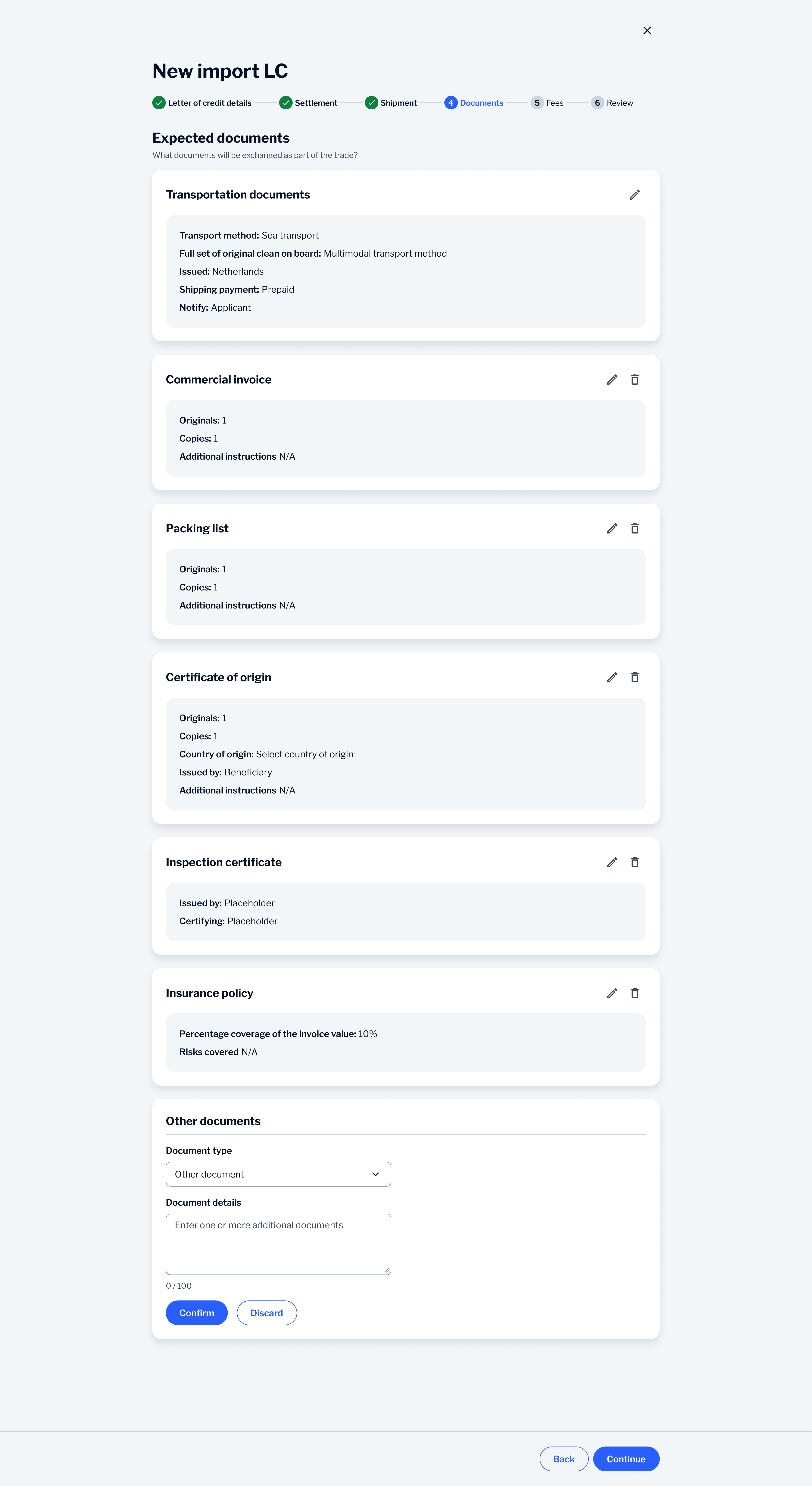
Local editing preserves progress
Users can update individual documents without affecting the rest of the flow, maintaining a sense of control.

Breaking the process into smaller actions reduces cognitive load and helps users focus on one decision at a time. The summary cards provide constant feedback, allowing users to quickly verify what has already been defined without reopening each form.
The ability to edit individual documents without losing progress also gives users a stronger sense of control, which is important in a high-risk flow where accuracy matters.
As more documents are added, the layout remains easy to scan due to clear separation, consistent structure and predictable interactions, preventing the experience from becoming overwhelming.
Outcome
The redesigned Document Request step made it easier for users to define and review document requirements without feeling overwhelmed.
By breaking the flow into smaller, focused actions and introducing a clear add/confirm/review pattern, the experience reduced the cognitive load. Users could define one document at a time, verify it through summary cards and make changes without losing progress.
This helped improve clarity and reduced the risk of errors in a step where accuracy is critical, making the overall process feel more controlled and easier to complete.